How to Care for Fresh-Cut Hydrangea Flowers from the Florist

Hydrangea flowers are extremely popular, but people get really disappointed when they don’t last. Their large, soft flower heads make them one of the most loved flowers in homes and floral arrangements. However, hydrangeas are also known to be quite thirsty flowers, so they need the right care to stay fresh and beautiful for as long as possible.
Many people assume hydrangeas are delicate or difficult, but with the right preparation and handling, they can last surprisingly well in a vase. Understanding how to choose them, transport them, and prepare them once you arrive home can make a big difference.
Locally grown hydrangeas are in season from November to the end of April.
Hydrangeas are a seasonal bloom, which means their quality is best when they are grown locally during peak months. You can explore more blooms in the seasonal flowers guide.
Buying flowers during their natural growing season is always a good idea because they are usually fresher and stronger. When hydrangeas are grown locally and purchased in season, they typically travel less distance from the farm to the florist, which helps maintain their quality.
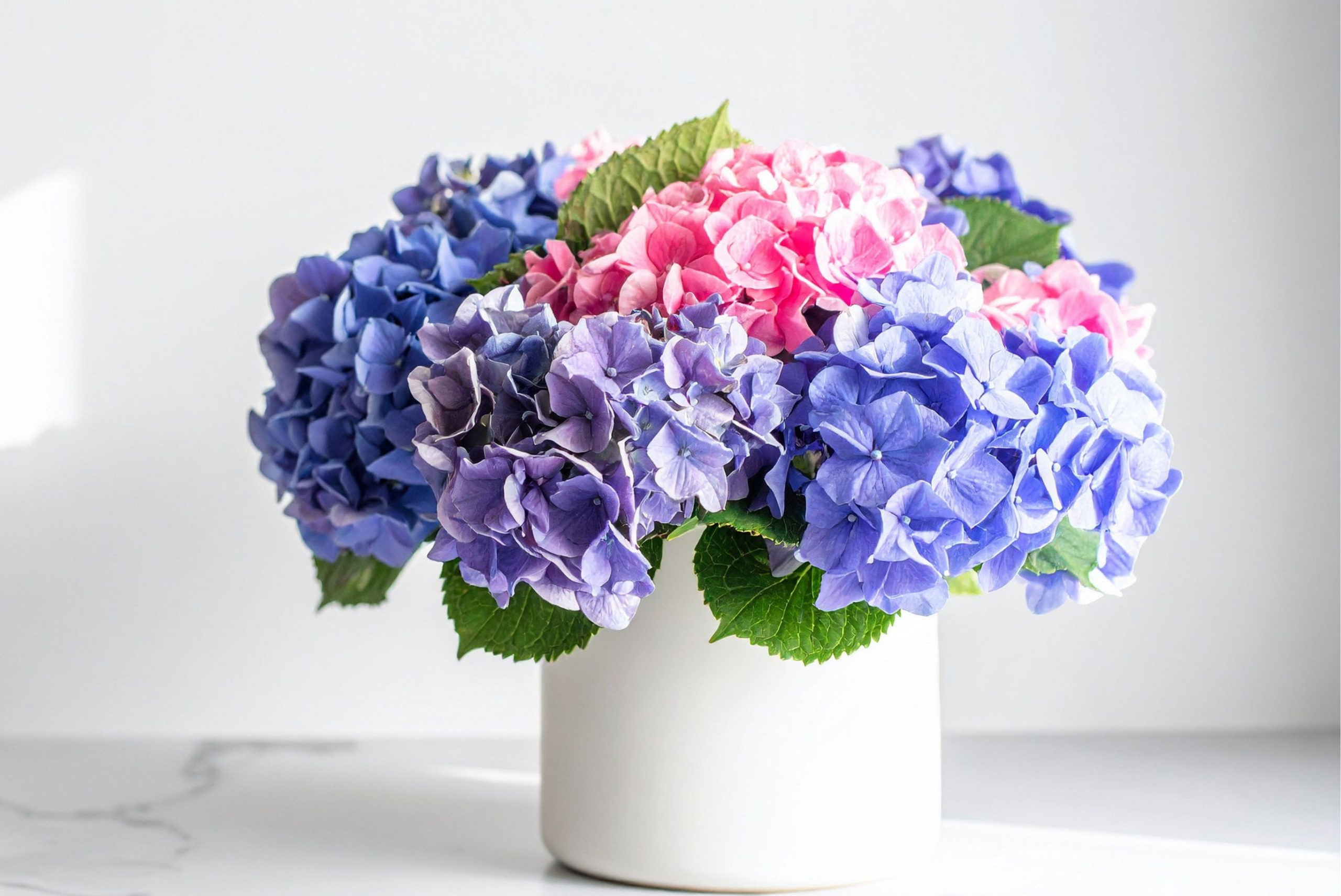
They come in lots of different colours and varieties. Some hydrangeas have soft pastel tones such as pale blue, blush pink or creamy white, while others develop richer colours as they mature. You may also see green hydrangeas or antique varieties that change colour over time. This range of colours makes them perfect for home styling, weddings, and seasonal arrangements.
There are different ways to make them last. Over the years, people have shared many different tricks and flower care methods for hydrangeas.
We’ve heard customers say “bash the stems”, “burn the stems with an open flame”.
These suggestions have been passed around for a long time, and they come from older flower care methods designed to open the stem so it can absorb water. While some people still use these techniques, there are simpler and safer ways to help hydrangeas stay hydrated.
We recommend the following:
1. Prepare your vase before bringing hydrangeas home
- Begin by getting your vase ready to place your hydrangeas straight in when you get home. Preparing the vase first means your flowers can go directly into fresh water without delay.
- Wash the vase with diluted bleach. This helps remove bacteria that may be present inside the vase. Bacteria can clog flower stems and reduce their ability to absorb water, which can shorten the life of your flowers.
- Fill the vase with cool, fresh water. Hydrangeas drink a lot of water, so starting with a clean vase filled with fresh water helps keep them hydrated from the start.
- Have secateurs ready to trim stems. Sharp secateurs create a clean cut on the stem, which allows water to travel up the stem more easily.
2. Choosing hydrangeas at the florist
- Go to a reputable florist. Experienced florists know how to handle flowers properly and store them in conditions that keep them fresh.
- Park the car in the shade so it stays cool. Flowers can quickly lose moisture if left in a hot car, especially during warmer months.
- In the store, look for hydrangeas with firm flower heads. A fresh hydrangea bloom should feel full and hydrated. The petals should not feel papery or dry.
- Take them straight home. Don’t leave them in the car for an hour. Flowers should spend as little time as possible out of water.
If you’re doing a few shopping trips, make buying hydrangeas the last on your list.
This simple step helps protect the flowers from heat and dehydration.
3. Using Alum powder to extend hydrangea life
- Pick up a sachet of Alum powder from Camberwell Florist. Alum powder is used as a post-harvest conditioner, which keeps the hydrangeas fresher and longer-lasting
Alum powder helps the flower stem take up water more effectively. Hydrangeas rely heavily on water absorption, and improving the stem’s ability to drink can significantly improve how long the flowers last.
Follow the instructions provided. Using the product as directed ensures the best results.
4. Preparing hydrangeas once you get home
- Go straight home. Once home, it is best to prepare the flowers immediately so they can begin absorbing water again.
- Cut stems on a 45-degree angle, and also cut vertically. Cutting the stem at an angle increases the surface area that can absorb water. The small vertical cut helps open the stem fibres slightly. This opens up the stem so they can drink up water.
- Sit them in the pre-prepared vase and display them away from direct sunlight, air conditioning vents and ripening fruit. Heat, airflow and gases released by ripening fruit can shorten the life of fresh flowers.
Choosing a cool location inside the home will help your hydrangeas stay hydrated and look their best.

How to revive wilting hydrangea blooms
Do this immediately at the onset of hydrangea blooms wilting:
- Fill the sink or bath with tepid water. Not too hot, not too cold.
- Submerge the entire bloom in water, stems and flower head.
- With a cloth or heavier object, weigh down the stem (as it will float and the stem may sit out of the water)
- Leave for 3–5 hours
Flower heads will revive.
Hydrangeas are unusual because their petals can absorb water as well as their stems. This is why soaking the entire bloom can help bring the flowers back to life.
Need help choosing fresh hydrangeas?
If you are looking for fresh hydrangeas, a custom arrangement, or advice on seasonal flowers, our team is always happy to help.
Whether you are planning a special occasion, sending flowers as a gift, or simply want to enjoy beautiful blooms at home, we can guide you on the best flowers available right now.
Contact our team to check hydrangea availability or discuss your flower order.
Frequently Asked Questions
1. How long do cut hydrangeas last in a vase?
With proper care, fresh-cut hydrangeas can last around five to ten days. The exact lifespan depends on how fresh they were when purchased and how well they are hydrated.
2. Why do hydrangeas wilt so quickly?
Hydrangeas have very large flower heads that require a lot of water. If the stem cannot absorb enough water, the bloom will droop quickly.
3. Should hydrangeas be kept in sunlight?
Hydrangeas last longer when displayed in a cool location away from direct sunlight. Too much heat can cause them to lose moisture faster.
4. How often should I change the vase water?
It is best to change the water every one to two days. Fresh water helps prevent bacteria buildup and keeps the stems healthy.
5. Can hydrangeas really recover after wilting?
Yes. Because the petals absorb water, soaking the entire flower head in tepid water for several hours can often revive wilted blooms.